

26.06.2026 19:30
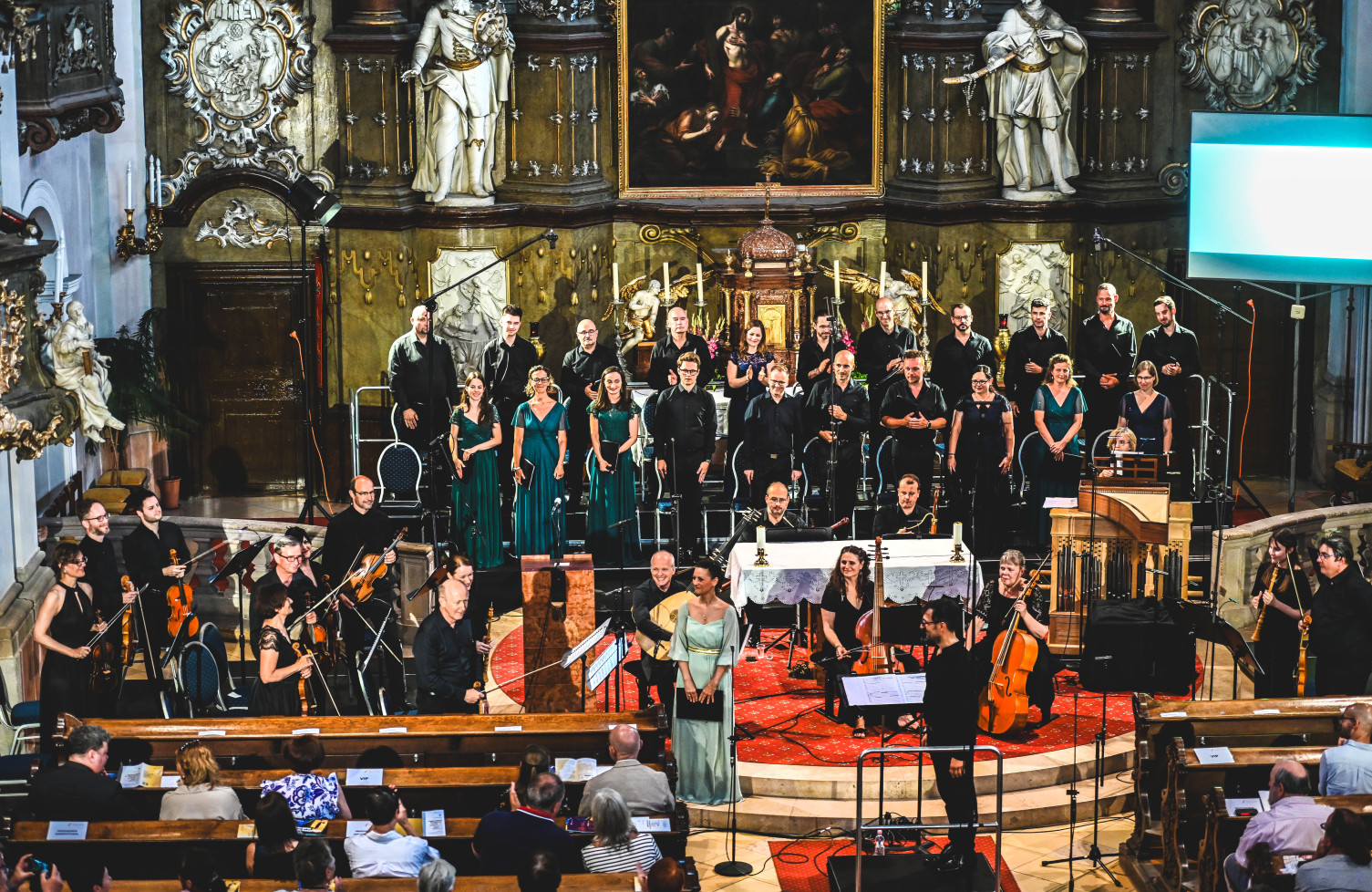
Opening concert - Capella Savaria and Purcell Choir
Vác, Fehérek temploma
Early Music Days
Festival concert

Tickets can be purchased at Vác, Tourinform Office, at the concert venues before the concerts, and at www.jegymester.hu.
Ticket discounts:
Residents of Vác are entitled to a 50% discount on tickets upon presenting their address card, available at the venue and at the Vác Tourinform Office.
We offer a 10% discount for students and pensioners. Filharmonia Hungary season ticket holders can purchase tickets with a 20% discount by showing their season tickets! Individual discounts cannot be combined!
The individual discounts cannot be combined.
We reserve the right to change the programmes, dates, venues, and performances, and ticket prices may change accordingly.


Few families contributed as significantly to Hungary's cultural life in the 17th and 18th centuries as the Esterházys. Beyond their active role in driving out the Turks and in Baroque rebuilding, they held key ecclesiastical and state positions, tirelessly preserving high culture during wartime and, whenever possible, elevating it to a level comparable to Vienna's. While Pál Esterházy and Joseph Haydn are the most renowned for their work at the Esterházy court, others also played important roles. For example, the opening concert of the 2026 Early Music Days in Vác traces its historical roots to Baroque Pressburg (Bratislava). Imre Esterházy, Archbishop of Esztergom, maintained a top-tier orchestra in Pressburg, then Hungary’s center, where many distinguished - mainly foreign - musicians and composers were active. Among them was Johann Matthias Schenauer, about whom little is known, except that he worked in Pressburg for several decades in the early 18th century and was a prolific composer of numerous sacred and secular works. Only a few of his compositions survive in performable form, such as his Requiem in C minor. This forgotten piece will also be performed at the festival’s opening concert.
The Nelson Mass, composed in 1798 at the request of Prince Nikolaus II Esterházy, is among Haydn’s most celebrated mass compositions. Its subtitle, Mass in Time of Distress, captures the tense, dramatic, and emotional mood of Europe during the Napoleonic Wars, while also reflecting Haydn's expansive vision and confidence at the peak of his career.
Join us for this concert and step into the 18th-century world of the Esterházys!
Collaborating partner: the Haydneum - Hungarian Early Music Centre Foundation.
Haydneum is supported by the Prime Minister’s Office and Bethlen Gabor Fund Management Ltd.